"See no evil, hear no evil, speak no evil". We have heard this maxim many times, associated with the iconic three wise monkeys that have entered our collective culture. But what does it really mean?
The origins
The three monkeys are the guardians of the Tōshōgū Shinto shrine (1617), in Japan, and represent the even older maxim: "See no evil, hear no evil, speak no evil".
The monkeys are respectively known as:
🙈 Mizaru (見猿), who sees no evil;
🙉 Kikazaru (聞か猿), who hears no evil;
🙊 Iwazaru (言わ猿), who speaks no evil.
In some traditional depictions you can also find a fourth monkey, with its arms crossed, urging us to do no evil.
Why monkeys, of all things?
A curious and almost accidental fact! The association of this ancient maxim with monkeys was not the original one. It comes from a play on words between -zaru (which indicates the negation of the three verbs) and zaru as a variation of saru, meaning monkey, used in compound words.
From the temple to the smartphone
Nowadays, as well as being much loved as a decorative item, the three wise monkeys accompany us every day on our smartphones and on social media, in the form of emoji! Having lost their aura of wisdom, they help us to emphasise a message, express a concept and brighten up chats with friends in the spirit of joy and empathy.
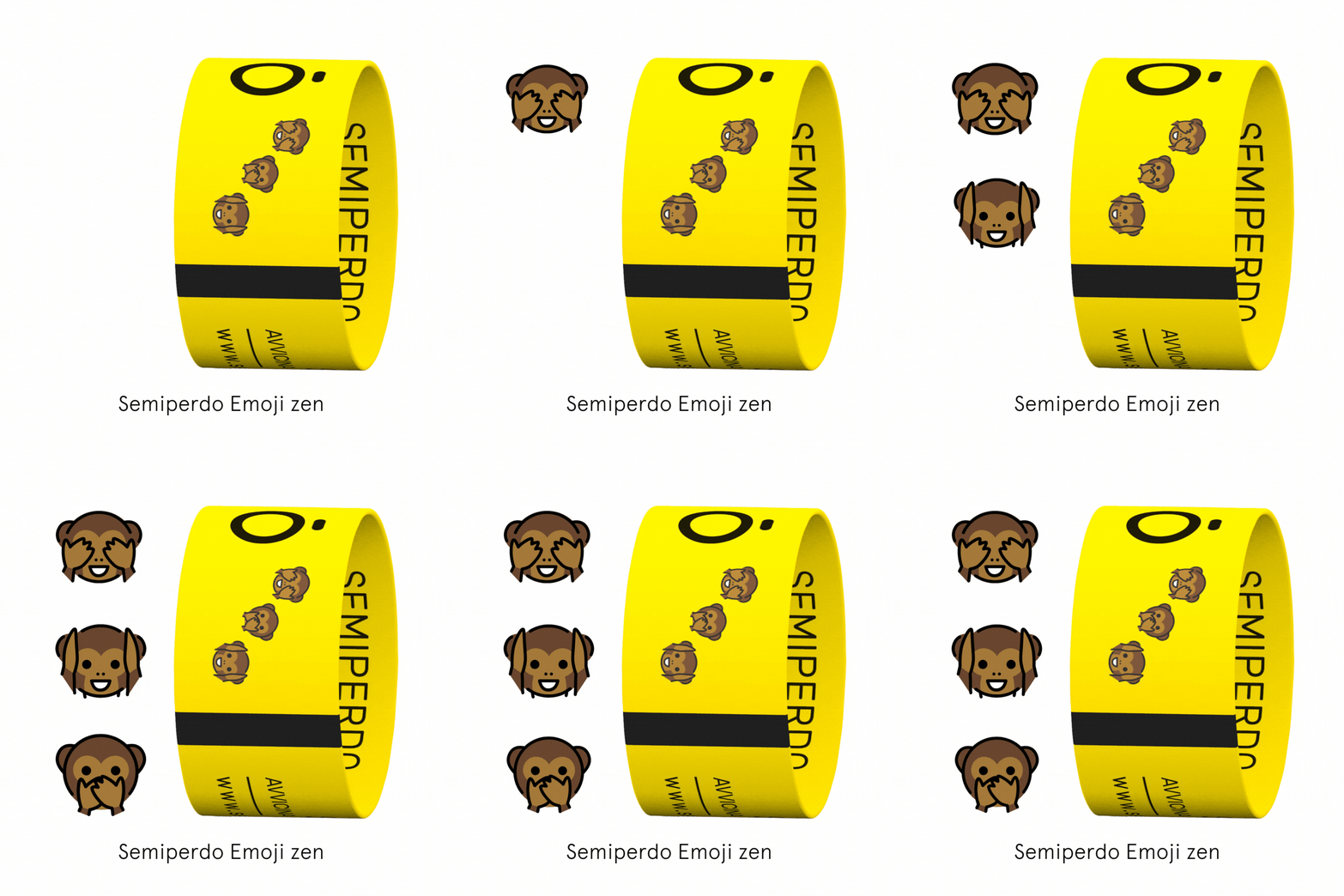
bluon.me Emoji zen
The three wise monkeys therefore could not be missing from the limited-edition bluon.me Emoji collection of anti-loss bracelets for children! bluon.me Emoji zen is a joyful, sparkling bracelet to get ready — wisely — for the August holidays and to support Fondazione Operation Smile ETS .
For every bluon.me Emoji purchased, in fact, including the Emoji zen model, together we will donate €1.50 for a child's smile.